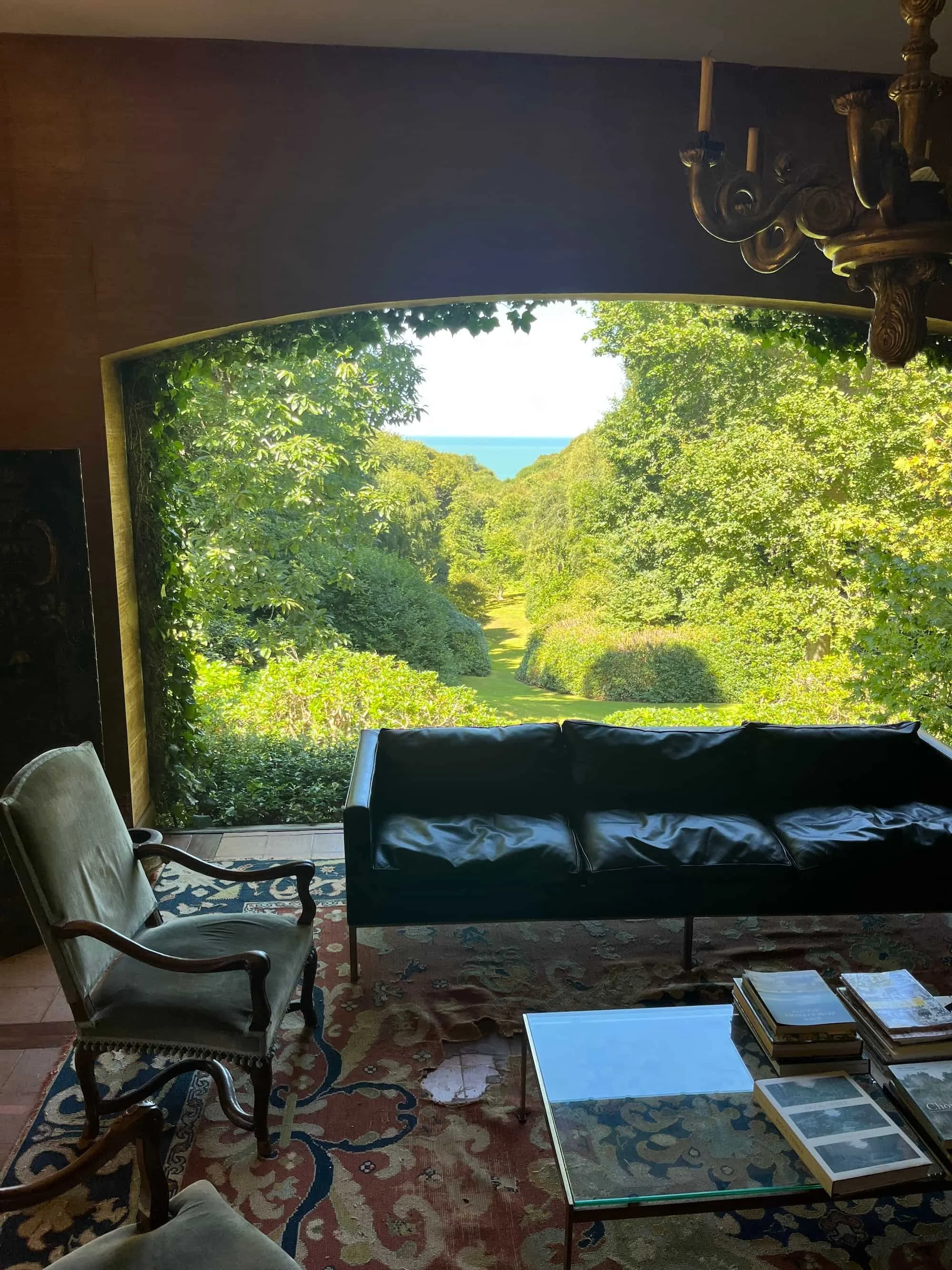
Gardens of Normandy, France
Bel-Air Garden Club Tour: Exploring Gardens and Historic Estates
The Bel-Air Garden Club embarked on an enriching horticultural journey through Northern France, exploring some of the region's most remarkable architectural castles, chateaux, and manors, and most importantly, the gardens. These gardens, deeply intertwined with the estates they adorn, have evolved over centuries as their uses and aesthetic influences changed. Most chateaux have been owned by families for generations, who have made concerted efforts to maintain or restore both the architectural features and surrounding landscapes, striving to uphold the original spirit and historical significance of their properties.
Today, the gardens, serve as living history and are sustained not only through preservation efforts but also through income generated by selling wines, produce, and plants, as well as through garden nurseries, educational classes, and guidebooks.
The Evolution of French Gardens: From Function to Beauty
During the Medieval period, gardens in France served a primarily utilitarian purpose. These gardens were designed to support the household by providing essential vegetables and medicinal herbs. Beyond their practical use, they also offered a protected space, creating a sense of sanctuary and privacy for those living within the home.
In the 1600s, the purpose and design of French gardens began to shift, influenced by Italian traditions brought by figures such as Catherine de Medici. This era marked a significant transformation, as gardens moved beyond their functional roots to embrace aesthetics and ornamentation. The introduction of geometric planting beds, classical statues, and elaborate water features signaled a new integration of gardens with the surrounding architecture.
Le Nôtre’s Influence on the French Formal Garden and Versailles
In the late 1600s and early 1700s, landscape architect André Le Nôtre, commissioned by King Louis XIV, envisioned and created the quintessential French formal garden (jardin à la française) at Versailles.
According to Jardins du France, André Le Nôtre “employed perspective as a guiding principle in which the garden was organized.” Le Nôtre focused the garden around a central axis with oblique and perpendicular axes shaping the layout of flowerbeds. In addition to this main axis, Le Nôtre incorporated oblique and perpendicular axes to determine the arrangement of the various flowerbeds, resulting in a harmonious and orderly layout. He replaced many statues with topiary forms to emphasize the geometric design, and the hedges framing the gardens became elegant, plant-based walls—one of the hallmarks of the ‘à la française’ style
Another of Le Nôtre’s contributions was the invention of the parterre. This formal garden feature consists of flower beds laid out in decorative, often intricate patterns, each area separated by walkways. The concept is still incorporated in garden designs to this day.
The impact of Versailles’ formal gardens was far-reaching. Inspired by the grandeur and precision of Le Nôtre's work, wealthy aristocrats soon adopted the formal garden concept for their own estates. They tailored and scaled their gardens to complement and accentuate the proportions of their châteaux, thereby embracing the principles of perspective and symmetry that defined this iconic style.
The Rise of the English Landscape Garden
By the late 1700s, garden design in France underwent a dramatic transformation with the emergence of the English Landscape style. This new phase marked a departure from the strict formality and symmetry of earlier French gardens. Many formal gardens were either destroyed or remodeled to reflect the principles of the naturalistic style.
The English Garden typically featured a large lake, expansive rolling lawns, and groves of trees, all arranged to evoke a sense of effortless beauty and tranquility. Decorative elements such as classical temples, Gothic ruins, picturesque bridges, and other architectural follies were introduced to create an idyllic landscape.
This concept was pioneered by William Kent and other influential figures, who championed an "informal" garden style. Their approach was a direct reaction against the rigid structure of architectural gardens. Inspiration for the English Landscape garden was drawn from the works of landscape painters like Salvator Rosa, Claude Lorrain, and Nicolas Poussin, as well as the classic Chinese gardens of the East.
Lancelot "Capability" Brown became a leading figure in the development of the English Landscape Garden, implementing his designs at notable landmarks such as Blenheim Palace and Audley End. Over his career, Brown worked on approximately 250 landscapes, with about 150 of these gardens still preserved and worth visiting today.
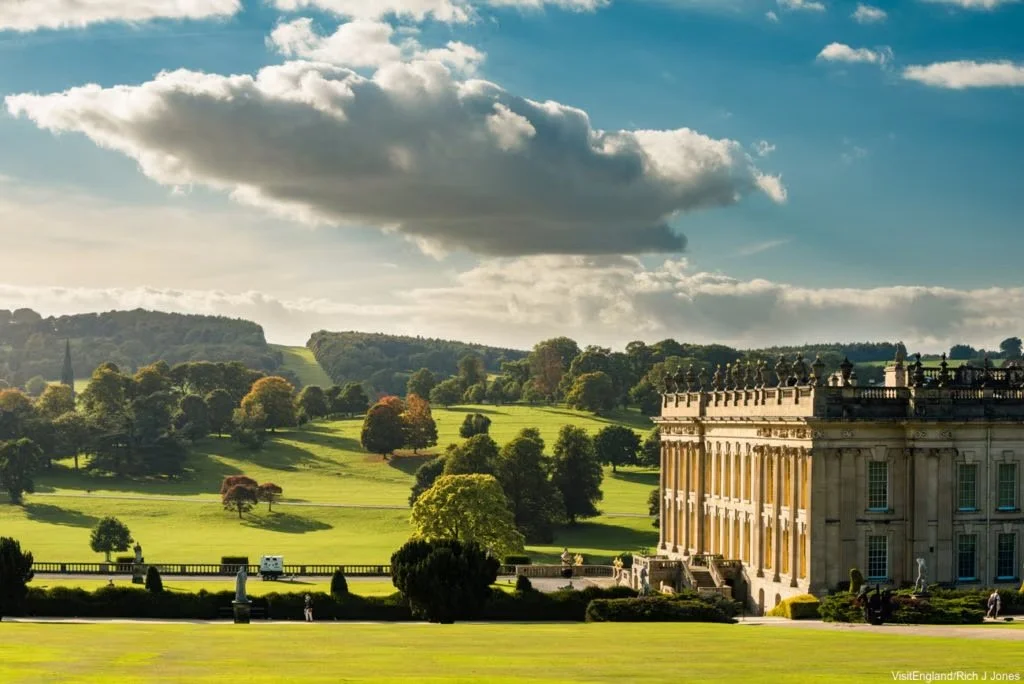
Capability Brown’s landscape design for the gardens at Audley End © Historic England Photo Library
The International Influence of the English Landscape Garden
The influence of the English Landscape Garden was not limited to England; its naturalistic style and design principles quickly gained traction across Europe. The aesthetic was embraced and established in several other countries, including Germany, Poland, the Netherlands, and Russia.
A significant example of this international impact occurred in 1776, when Catherine the Great drew inspiration from the English Landscape Garden when building her palace, Tsarskoe Selo in St. Petersburg.
The Evolution of Garden Styles in the 19th and 20th Centuries
During the 19th century, garden design evolved into an eclectic blend of various stylistic influences accumulated over preceding years.
The 20th century, however, was marked by significant challenges for gardens and estates. The devastation of the World Wars led to widespread neglect, as many gardens and properties were either destroyed or suffered severe damage. In the aftermath, there emerged a growing recognition of the historical value of gardens, sparking efforts to preserve and restore them.
The Itinerary
Day One: Château du Champ de Bataille, Le Neubourg
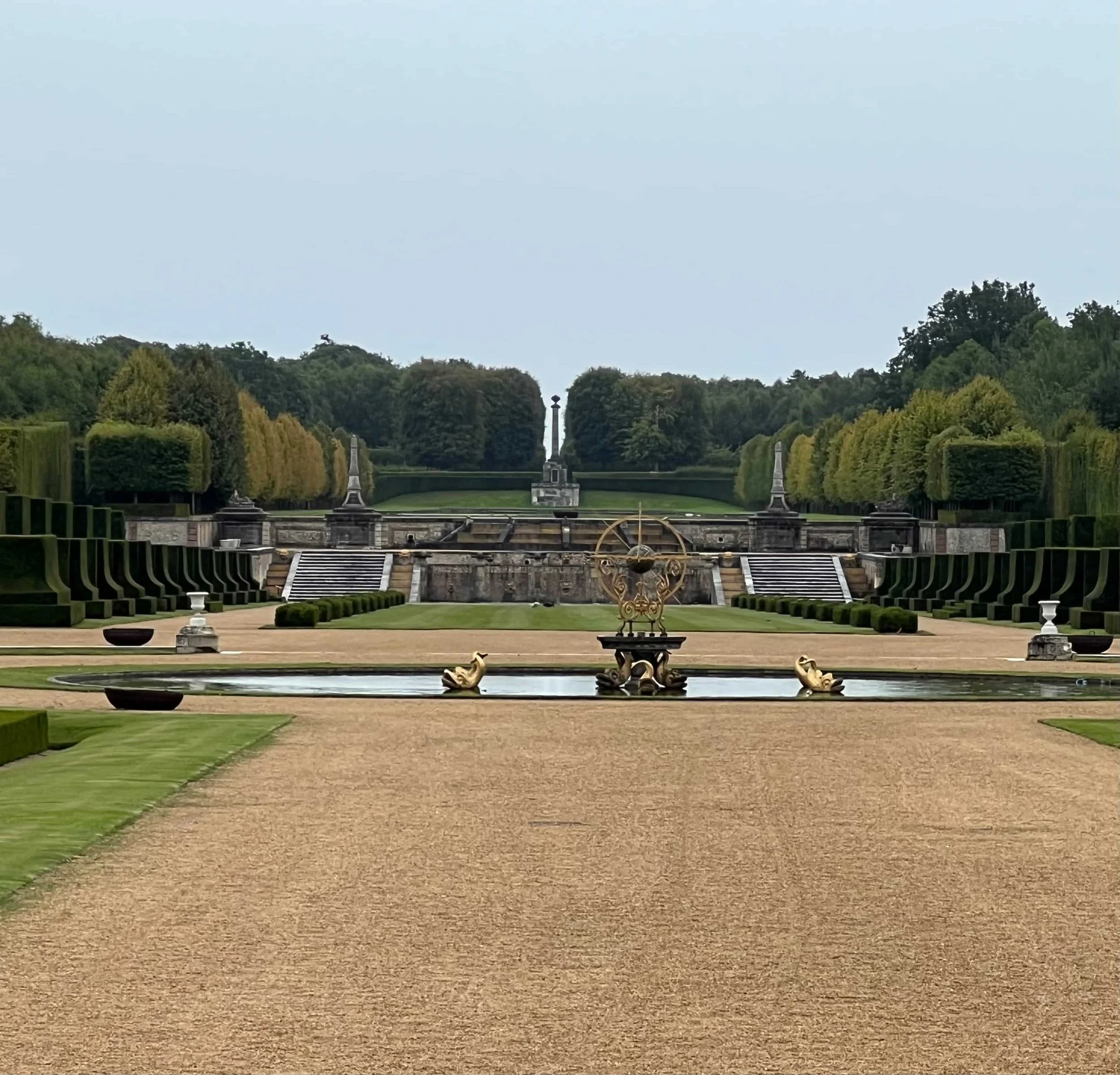
The club’s journey began at the Château du Champ de Bataille in Le Neubourg. In 1992, Jacques Garcia purchased this estate and led a meticulous restoration of both the gardens and interiors, returning them to their 17th-century grandeur. Now referred to as Normandy’s Versailles, the site stands as one of the largest private garden projects in France. His extensive portfolio features renowned establishments such as Hotel La Mamounia, La Réserve Paris, Hotel Costes, L'Oscar London, The Nomad New York.
According to the French Ministry of Culture, these features were faithfully reproduced, with new elements taking inspiration from the original design. The restoration process, which spanned over five years, involved designing, leveling, planting, and irrigating the vast 94-acre property. Jacques Garcia relied extensively on historical sketches of the estate’s original layout, using these valuable drawings to guide every aspect of the work. The sketches meticulously documented the arrangement of the great terrace, the detailed broderies and bosquets, and the proportions of the distinctive squares dedicated to Apollo and Diana. By referencing these historical sources throughout the restoration process, Garcia ensured that the renewed gardens remained true to their historic origins.
During the French Revolution, the chateau endured significant upheaval. The estate was stormed, and its furnishings were dispersed and sold throughout France. It was later repurchased by the House of Harcourt, which brought the property back into the family, restoring its legacy and connection to its historical roots.
Visitors on the tour learn about numerous ingenious strategies employed to maintain the garden’s health and beauty. One notable example can be found in the vineyards: roses are planted at the end of each row. These rose bushes serve as an early warning system, showing damage from insects before the grapevines do. This practical method allows gardeners to address potential issues promptly, safeguarding the vitality of the vineyards and preserving the estate’s horticultural excellence.
Inside the château, visitors can see well-preserved historical features including lush furnishings, taxidermy, and kitchens. The 17th-century kitchen remains intact, evoking a sense of daily life from that era with its chicken coop, wine cellar, main kitchen, and maid’s kitchen.
Lunch: Restaurant Du Golf Du Champ De Bataille, located on the château’s grounds.
Lodging: Hotel Chateau la Chenevière, 14520 Port-en-Bessin-Huppain https://www.lacheneviere.com/. Dinner is served at the hotel’s restaurant.
Day Two: Château de Brécy and Surroundings
Drive from Hotel Chateau la Cheneviere to location: approximately 45 minutes.
The group visited Château de Brécy in Saint Gabriel Brécy. Nestled in the verdant countryside near Bayeux and close to the English Channel, the estate brings together the chateau and several distinct gardens. While its roots trace back to the Middle Ages and the Renaissance, Château de Brécy’s gardens are a testament to the baroque exuberance of 17th-century France. Built between 1626 and 1636 by Philippe Labbey, the château’s design may have been inspired by the architect Mansart. Owned by the Le Bas family for 200 years, the property eventually fell into disrepair until Didier and Barbara Wirth purchased it in 1992, spurred by a call from designer Hubert de Givenchy.
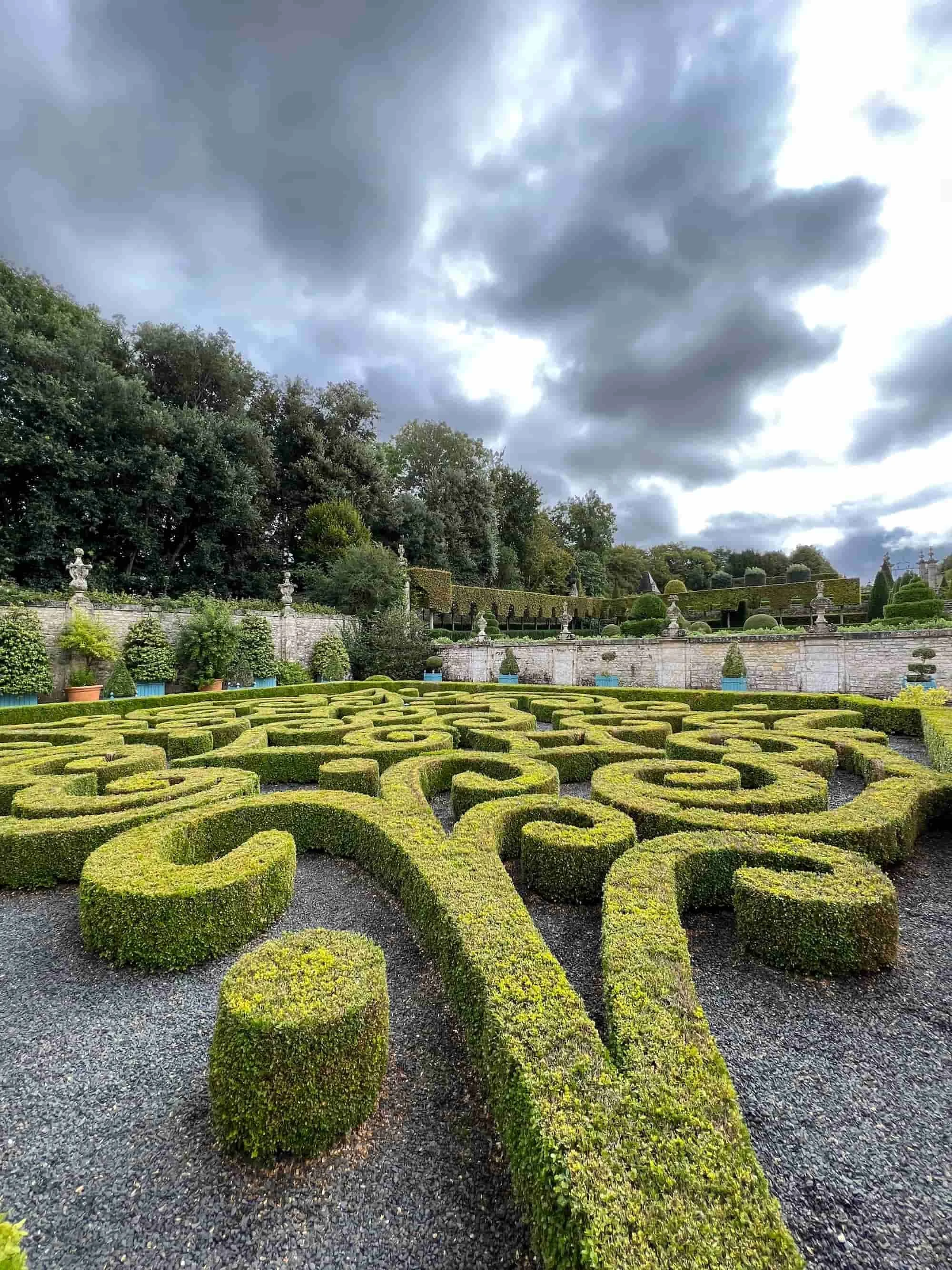
Libby Doheny, Bel-Air Garden Club
Restoration Efforts Under the Wirths
When Didier and Barbara Wirth undertook the revitalization of Château de Brécy and its gardens, their work began with a dramatic transformation of the landscape. At the outset, only four trees surrounded the house, so the Wirths immediately set about expanding the greenery by planting more than 2,000 additional trees. This ambitious reforestation effort significantly enhanced the estate’s natural beauty and the results could be seen immediately.
Beyond landscaping, the Wirths addressed numerous essential repairs throughout the grounds. They took care to conceal modern electrical and irrigation systems, ensuring that these necessary updates did not detract from the property’s historic charm. The restoration also included rebuilding the exterior walls and stairs, carefully preserving the architectural integrity of the chateau and its surroundings.
A particularly notable aspect of their commitment to restoration was the repair of the 14th-century village church of Sainte Anne, which forms part of the Château de Brécy estate. The Wirths approached this project with great care and dedication, lovingly restoring the church to its former glory and ensuring its continued place within the estate’s historic landscape.
Garden Design and Features
The gardens of Château de Brécy are distinguished by their four successive terraces, each offering a unique perspective and experience. These terraces are defined by maintained topiaries and hedges, composed of yew, boxwood, and hornbeam, which provide strong structure, symmetry, and linearity to the estate's verdant spaces.
A lush array of hydrangeas, roses, and clematis creates striking arrangements that capture the eye, while agapanthus, iris, lily, and hellebore contribute to the harmonious white, green, and blue color palette thoughtfully selected by Barbara Wirth. This careful choice of hues enhances the gardens' tranquil and cohesive atmosphere.
Distinctive Decorative Elements
Adding to the gardens' visual appeal, the signature blue planters crafted by Jardins du Roi Soleil—renowned as the supplier of the original Versailles planters—reflect the beautiful blue of the sky. These planters serve as a distinctive hallmark of the Brécy gardens, seamlessly integrating color and tradition into the landscape.
The grandeur of the gardens is further emphasized by extravagant Italianate balustrades, which introduce an element of classical elegance. Throughout the grounds, decorative sculptures adorned with fruit and floral motifs, along with dynamic carved lions, are thoughtfully placed. Together, these elements create a truly theatrical and immersive visual experience, defining the unique character of Brécy.
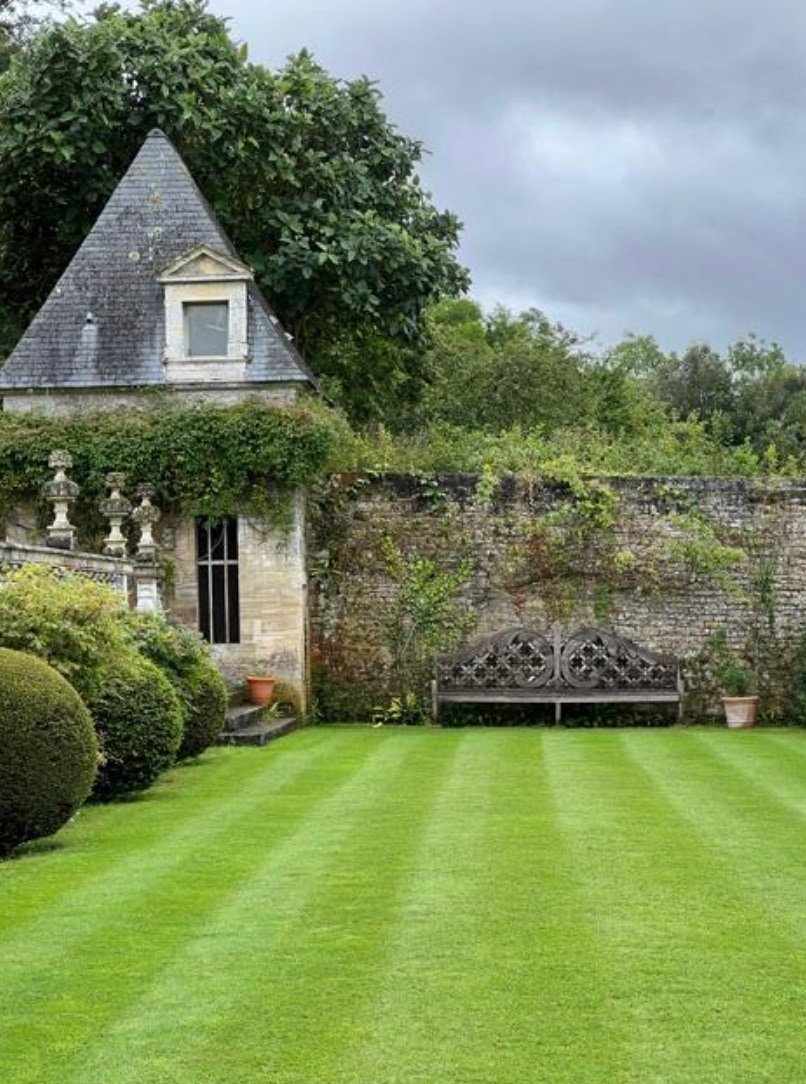
Libby Doheny, Bel-Air Garden Club
The Château’s Renowned Library and Scholarship
Within the walls of Château de Brécy lies an extraordinary library, home to thousands of volumes dedicated to the art and history of gardening. This comprehensive collection includes works dating back as far as the 16th century and encompasses a wide range of topics, covering all styles of gardens and regions from around the world.
Exploring the Gardens Through Literature
For those interested in delving deeper into the transformation of Château de Brécy and its celebrated gardens, Dr. Eric Haskell’s book, The Gardens of Brécy, A Lasting Landscape, provides an illuminating account. As a professor of French studies and an accomplished author on the subject of French gardens, Dr. Haskell has written extensively about the restoration and notable features of Brécy. His work offers valuable insights into the estate’s evolution and enduring beauty. Dr. Haskell is also recognized as a frequent lecturer and a friend of the Bel-Air Garden Club, sharing his expertise in the field.
Château de Brécy, located at 14480 Saint Gabriel Brécy, France, is open to the public several afternoons each week from Easter to the end of October.
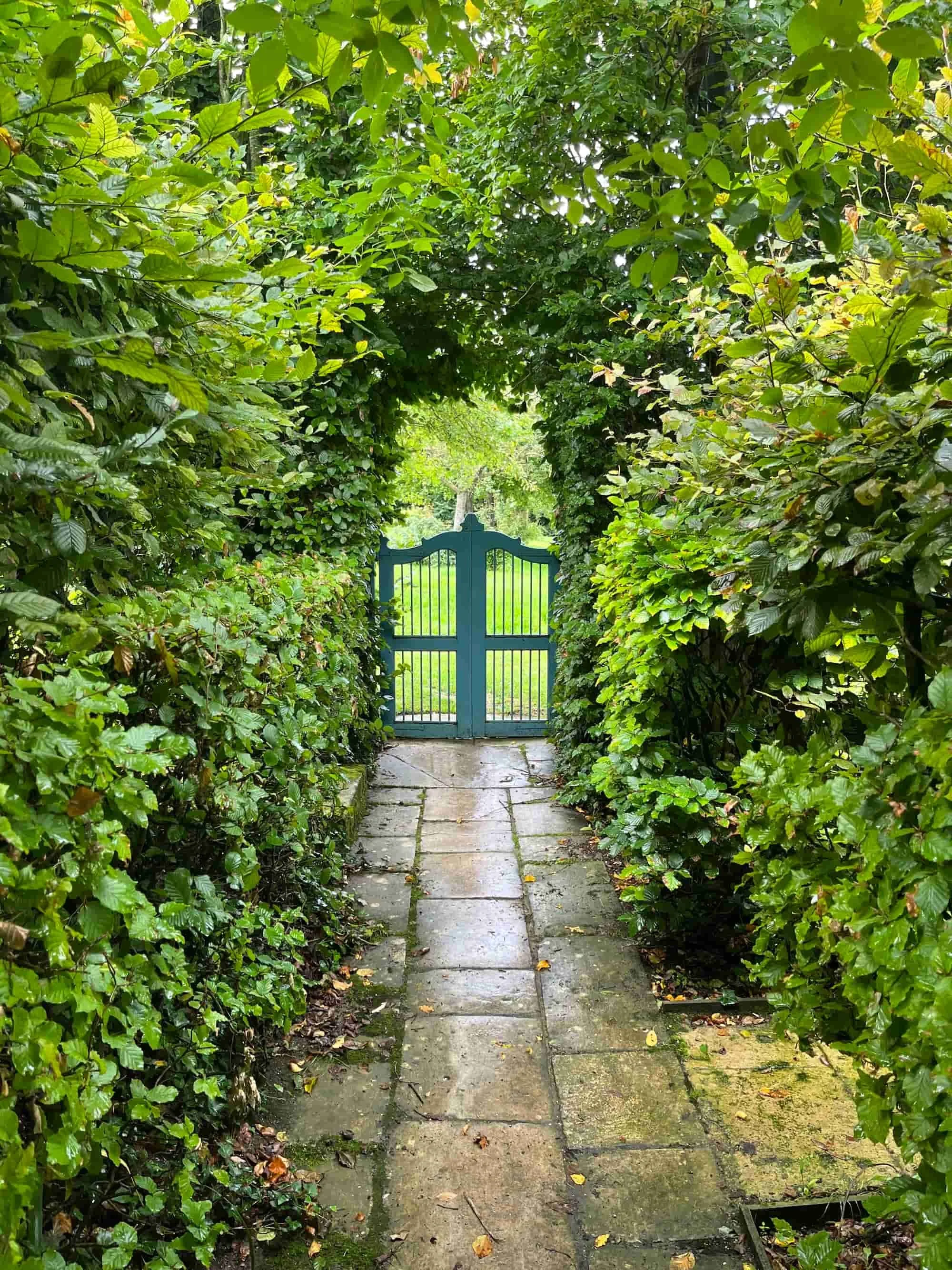
Chateau de Brecy, Andrea Scharff, BAGC
Château de Balleroy: Architectural Significance
Architectural Heritage of Château de Balleroy
Château de Balleroy, situated in Balleroy-sur-Drôme, exemplifies the artistry and innovation of early French classical architecture. The château was designed in 1631 by François Mansart, a celebrated architect whose influence is evident in the building’s proportions and elegant detailing. Notably, Château de Balleroy predates and is often credited with inspiring some of France’s most famous residences, including the illustrious Château de Versailles.
Recent Stewardship of Château de Balleroy
For the past fifty years, Château de Balleroy was meticulously cared for and restored by the Forbes family. Their stewardship was instrumental in maintaining the château’s historic grandeur and ensuring the preservation of its remarkable architectural features. Through their dedicated restoration efforts, the Forbes family safeguarded the integrity and legacy of this early masterpiece of French classical architecture.
In recent years, the château entered a new phase in its history with the transfer of ownership to American entrepreneur Roy Eddelman. This change marks the beginning of a new chapter for Château de Balleroy, continuing its distinguished legacy while upholding the standards of preservation and care established by its previous owners.
Recommended Stop Near Château de Balleroy
Just a short 20-minute drive from Château de Balleroy, this site is highly recommended as a noteworthy stop during your visit to the region. Its proximity makes it an ideal addition to your itinerary.
The Tapisserie de Bayeux: A Legendary Historical Artifact
A visit to the Tapisserie de Bayeux offers an unparalleled opportunity to experience one of the most remarkable treasures of medieval Europe. This legendary tapestry, more than 1,000 years old, stretches an impressive 70 meters in length. Expertly embroidered, it visually narrates the epic tale of William the Conqueror—chronicling his journey, the dramatic invasion of England, and his triumphant victory over his cousin Harold.
The tapestry’s detailed scenes provide a vivid and engaging account of this pivotal moment in history, allowing visitors to immerse themselves in the story of conquest and legacy that shaped the course of both French and English history.
Château de Balleroy, rue du sapin, 14490 Balleroy-sur -Drome Open April-September.
Day Three: Contemporary and Historic Gardens
Le Jardin Plume: A Modern Take on Classical Garden Traditions
The club explored Le Jardin Plume in Auzouville-sur-Ry, a seven-acre garden blending contemporary and classical styles, created by Patrick and Sylvie Quibel . At the heart of the garden lies the main allée, which is designed as an apple orchard interwoven with graceful grasses. Patrick maintains the lawn by mowing every four days, a practice that not only aids in seed dispersal but also imparts a formal, patterned aesthetic to the landscape. This careful approach reflects the structure and harmony characteristic of a traditional Norman orchard.
A defining feature of Le Jardin Plume is its innovative use of grasses and perennials. These plantings create a dynamic tapestry of colors and moods throughout the seasons, ensuring that the garden remains visually engaging and beautiful even in winter. In spring, sweeping displays of euphorbias and hellebores bring a fresh vibrancy to the grounds.
Additional highlights include a square mirror pond that adds tranquility and reflection, as well as a productive vegetable garden. Visitors can also explore the garden center, where many of the plants showcased in Le Jardin Plume are available for purchase.
Visiting Information for Le Jardin Plume
Le Jardin Plume welcomes visitors from the beginning of May until the middle of October. The garden operates on a specific weekly schedule to accommodate guests who wish to explore its unique landscape and features.
Wednesdays and Saturdays: Open from 10:00 AM to 12:00 PM and again from 2:00 PM to 6:00 PM.
Thursdays, Fridays, and Sundays: Open from 2:00 PM to 6:00 PM.
The garden center, where visitors can purchase many of the plants featured in Le Jardin Plume, follows the same opening hours but is accessible starting from the beginning of April.
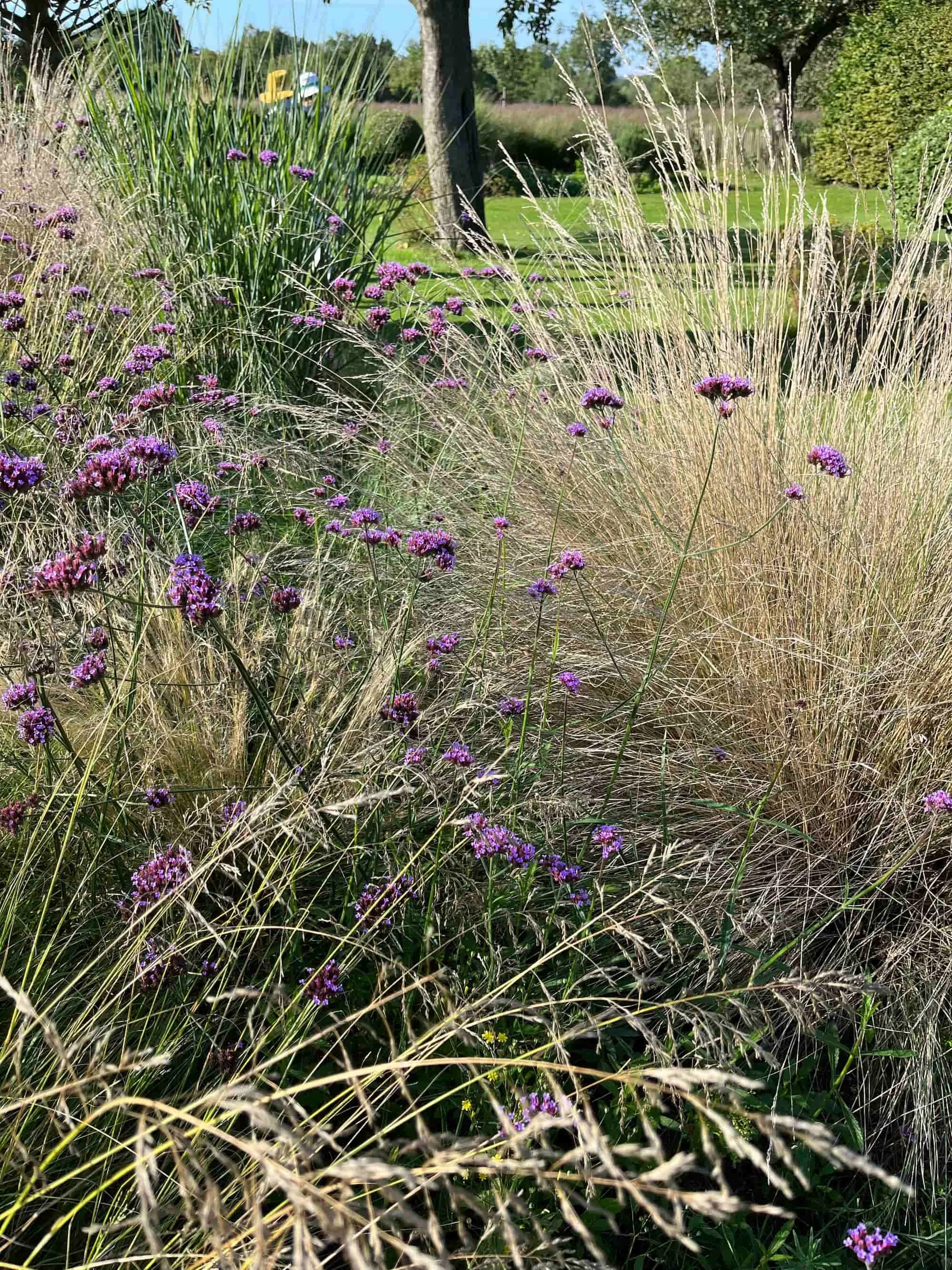
Le Jardin de Plume - Photo by Andrea Scharff
Les Jardins d’Étretat: Topiary Art Above the Sea
Perched high on the dramatic cliffs of Étretat and overlooking the expanse of the sea, Les Jardins d’Étretat stands out as an exceptional topiary garden. Created in 2016 by Russian landscape designer Alexander Grivko, the garden has quickly become recognized as one of the most exciting new gardens in Normandy.
The artistic vision of Grivko is evident throughout the garden, where sculpted greenery blends seamlessly with the natural contours of the alabaster cliff. This harmonious integration not only enhances the garden’s visual appeal but also creates a unique experience for visitors as they explore the site’s innovative topiary forms and breathtaking views.
Les Jardins d’Étretat’s excellence has been acknowledged by the Michelin Green Guide, which has awarded the garden two stars for the second consecutive year—a distinction reserved for only three sites in Normandy. This “worth a visit” recognition underscores the garden’s significance and appeal.
Today, Les Jardins d’Étretat ranks among the most visited regional sites in its category, welcoming over 120,000 visitors annually. Its combination of contemporary artistry, historical setting, and panoramic views make it a highlight for garden enthusiasts and tourists alike.
—
At Chateau de Miromesnil in Tourville-sur-Arques, the group explored gardens restored by the Vogüé family, who have owned the property for generations. The château is notable as the birthplace of Guy de Maupassant. For the past twenty years, Nathalie Romatet and her family have overseen the estate, creating an award-winning vegetable garden (potager) and offering private guided tours. The château’s architecture reflects the styles of Henri IV and Louis XIII, and its rooms honor former residents such as Armand-Thomas Hue and Guy de Maupassant.
The itinerary also included a visit to Jardin du Vasterival in Sainte Marguerite sur Mer. Established in 1957 by Norwegian-born Princess Sturdza, the 24-acre garden is celebrated for its botanical diversity and expert landscaping, offering year-round interest. Princess Sturdza designed and maintained the garden herself, layering trees to allow sunlight and using a diverse plant collection. Since her passing in 2009, her daughter-in-law has continued to lead its preservation and development. Jardin du Vasterival is open year-round and offers workshops and private guided tours for groups.
A notable workshop at Jardin du Vasterival is focused on “Transparency Pruning,” a technique refined by the garden's team. This method respects the natural shapes of plants and emphasizes careful observation, allowing light and rain to reach plant beds and promoting regeneration and plant diversity. The technique enhances lightness, transparency, and wind resistance, while ensuring a more even distribution of blooms.
Jardin du Vasterival: 346 Allee Albert Roussel, 76119 Sainte-Marguerite-sur-Mer, France.
Château de Miromesnil, Tourville-sur-Arques
Château de Miromesnil has remained under the stewardship of the Vogüé family for several generations, reflecting a rich heritage and continuity of care. This historic estate is renowned as the birthplace of the acclaimed writer Guy de Maupassant, adding literary significance to its architectural and cultural value.
For the past twenty years, the château has been managed by Nathalie Romatet, a younger member of the Vogüé family. Nathalie resides at Miromesnil year-round with her husband and three children, ensuring a vibrant family presence and ongoing dedication to the property’s preservation and enhancement.
In recent years, the Romatet family has overseen extensive restoration of the château’s gardens. Their efforts have culminated in the creation of an award-winning Potager (kitchen garden), which reaches its peak beauty in September. Visitors interested in exploring the estate in greater depth can arrange a private guided tour, offering insights into both the château’s storied past and its flourishing present-day gardens.
Historical Significance and Architectural Heritage
The Château de Miromesnil, constructed during the 16th and 17th centuries, stands on the grounds of a much older fortified castle. Its architectural design showcases the distinct styles of the Henri IV and Louis XIII periods, evident in the château’s elegant façades.
Notable Residents
Throughout its history, the château has been home to distinguished figures. Armand-Thomas Hue, Marquis de Miromesnil, notably resided here. As Keeper of the Seals under Louis XVI and the first President of the Parliament of Rouen, his legacy is closely tied to the estate. The château also holds literary significance as the birthplace of Guy de Maupassant, the renowned author, who was born here in 1850.
Evocative Salons
The salons within the château serve as a tribute to these celebrated individuals, preserving the memory of both Armand-Thomas Hue and Guy de Maupassant for visitors and admirers of history and literature.
Family Stewardship of Château de Miromesnil
The estate has remained within the same family for three generations, highlighting a tradition of stewardship and continuity. Since 2004, Nathalie and Jean-Christophe Romatet have resided in the château with their three children, ensuring a vibrant family presence and ongoing care for the property. This legacy began with Nathalie’s grandparents, Count and Countess Bertrand de Vogüé, who acquired Miromesnil in 1938 and established the foundation for its enduring heritage.
Château de Miromesnil, 76550 Tourville-sur-Arques, France, Tourville-sur-Arques
Jardin du Vasterival, Sainte-Marguerite-sur-Mer
Located near the coast of Dieppe in Northern France, Jardin du Vasterival is a renowned garden that reflects the vision and dedication of the late Norwegian-born Princess Sturdza. Beginning her work in 1957, Princess Sturdza personally developed the 24-acre garden, relying on her own efforts. She enriched the garden's plant collection with contributions from friends and layered trees thoughtfully to allow light to filter through to the lower levels, creating a unique atmosphere throughout the landscape.
Jardin du Vasterival is celebrated not only for its impressive botanical diversity but also for its exceptional landscaping. The garden is designed to offer visitors something of interest in every season, ensuring a dynamic and ever-changing experience. Since Princess Sturdza's passing in 2009, her daughter-in-law has assumed a leading role in maintaining and further developing the garden, continuing the legacy of care and innovation.
The gardens remain open year-round and provide opportunities for visitors to engage more deeply through participatory workshops or private guided tours, which are available for groups of ten or more.
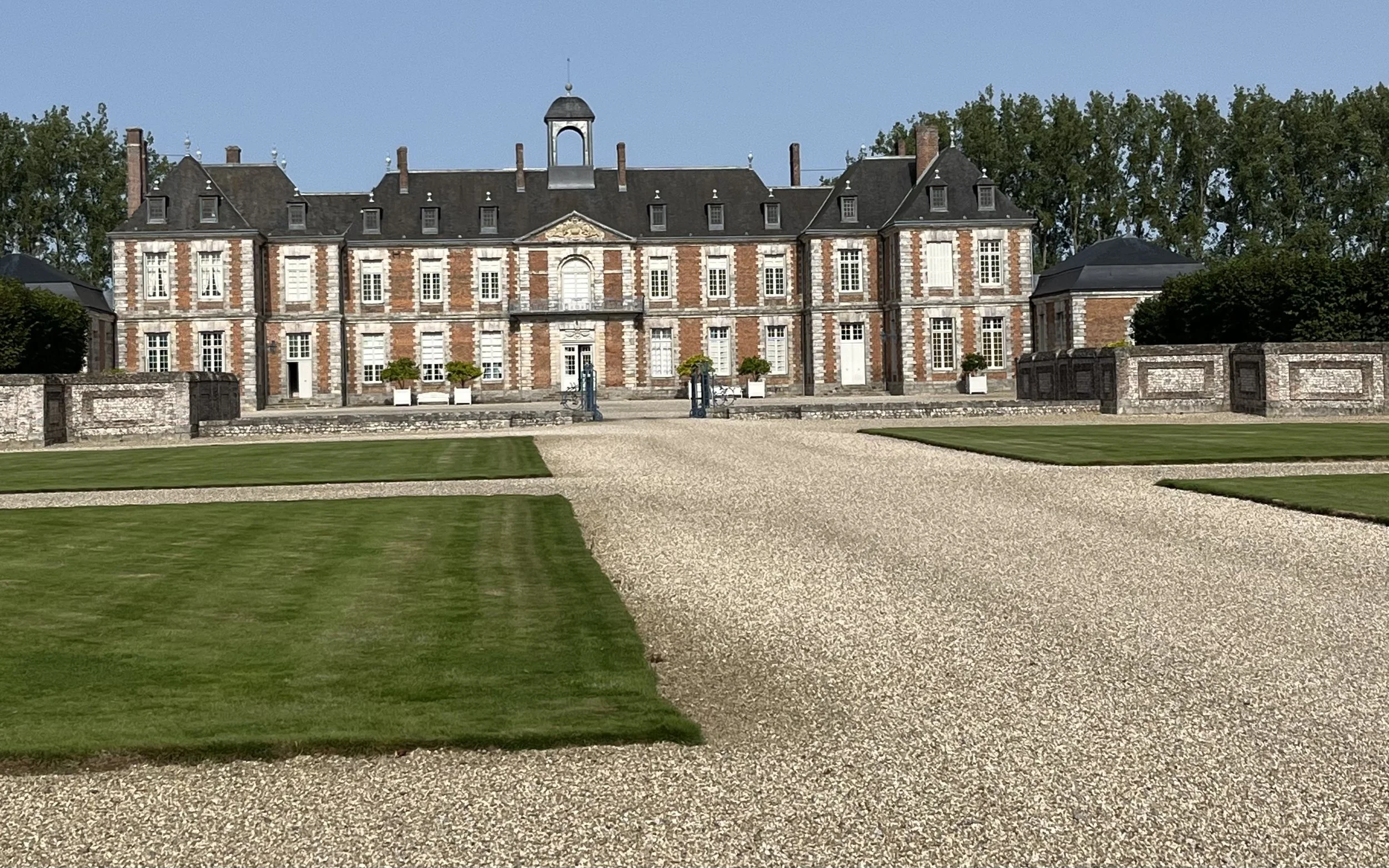
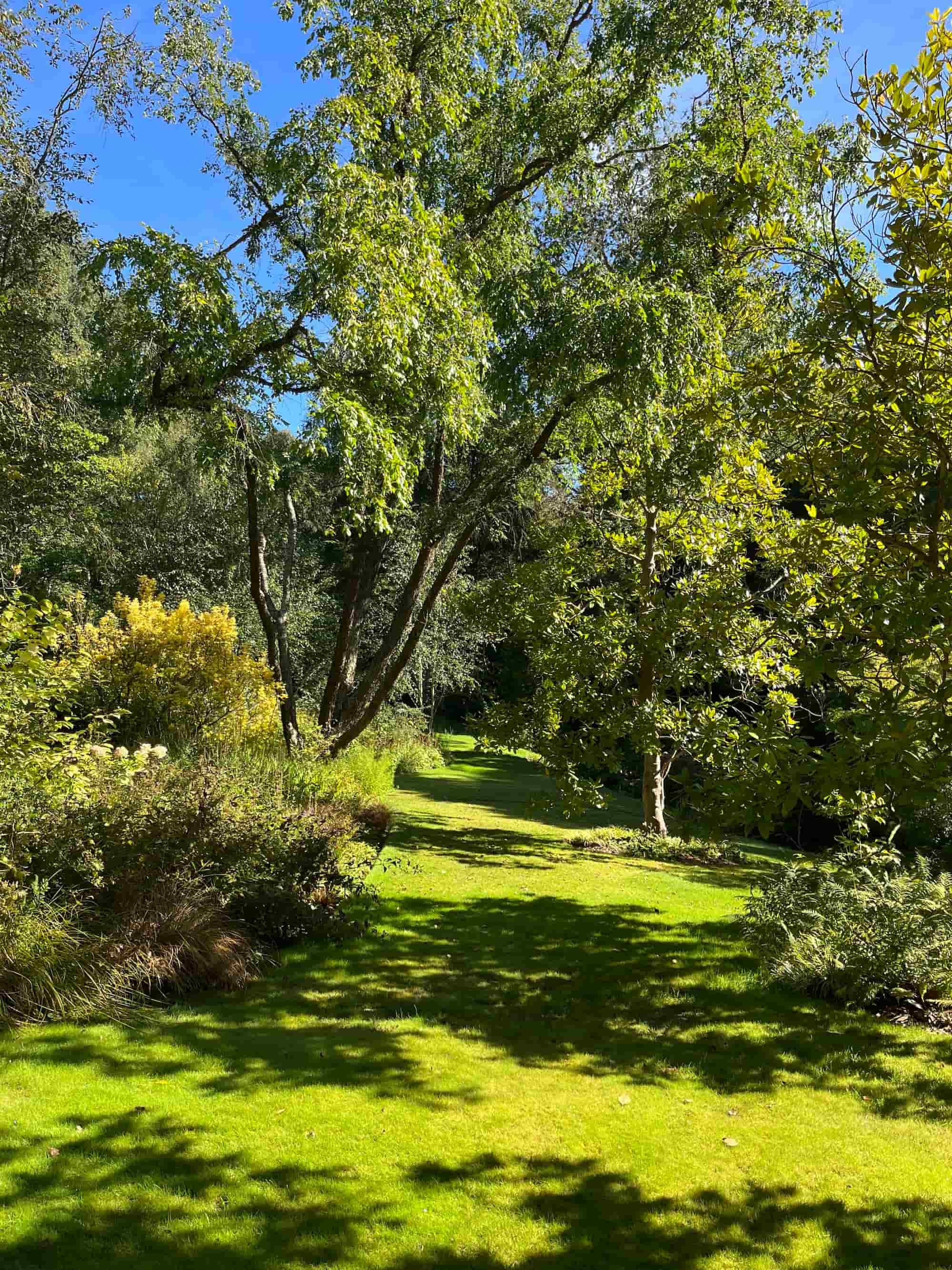
Libby Doheny, Bel-Air Garden Club, Jardin du Vasterival
Transparency Pruning Workshop at Jardin du Vasterival
Among the participatory workshops offered at Jardin du Vasterival, one stands out for its focus on the specialized Transparency Pruning technique. This method, refined over time by the expert team at Jardin du Vasterival, demonstrates a deep respect for each plant's natural form. The approach is rooted in careful observation, allowing gardeners to foster an environment where light and rain can penetrate the plant beds. This not only encourages regeneration but also supports the coexistence of a diverse range of plant species within the garden.
The benefits of Transparency Pruning extend beyond mere aesthetic enhancement. By introducing lightness and transparency into the landscape, the technique also increases resistance to wind and storms, making the garden more resilient. Additionally, it helps distribute blooms more evenly across the beds, contributing to a harmonious and vibrant display throughout the seasons. The principles taught in this workshop embody the thoughtful stewardship and innovative practices that define Jardin du Vasterival.
Jardin du Vasterival ,346 Allee Albert Roussel, 76119 Sainte-Marguerite-sur-Mer, France
Lunch: Hotel de la Terrassa, Rte de Vasterival, 76119 Varengeville-sur-Mer, France
Le Bois de Morville, Varengeville
Le Bois de Morville stands as a testament to the creativity and vision of the late contemporary landscape designer Pascal Cribier. Spanning 15 acres, this wooded park descends steeply toward the sea, providing a dramatic natural canvas for Cribier's experiments in landscape sculpting over four decades. His innovative approaches have left an indelible mark, making the garden renowned for its unique design techniques.
The development of Le Bois de Morville was not the work of Cribier alone; it arose from a collaborative alchemy with Eric Choquet and Robert Morel. Together, they transformed the wooded valley overlooking the sea into a majestic landscape, where distinct botanical atmospheres seamlessly blend. Visitors encounter a labyrinth, meadow, orchard, undergrowth, and valleys, all artfully associated to create a sense of magic and wonder unique to this setting.
The itinerary also included a visit to Jardin du Vasterival in Sainte Marguerite sur Mer. Established in 1957 by Norwegian-born Princess Sturdza, the 24-acre garden is celebrated for its botanical diversity and expert landscaping, offering year-round interest. Princess Sturdza designed and maintained the garden herself, layering trees to allow sunlight and using a diverse plant collection. Since her passing in 2009, her daughter-in-law has continued to lead its preservation and development. Jardin du Vasterival is open year-round and offers workshops and private guided tours for groups.
A notable workshop at Jardin du Vasterival is focused on “Transparency Pruning,” a technique refined by the garden's team. This method respects the natural shapes of plants and emphasizes careful observation, allowing light and rain to reach plant beds and promoting regeneration and plant diversity. The technique enhances lightness, transparency, and wind resistance, while ensuring a more even distribution of blooms.
Jardin du Vasterival: 346 Allee Albert Roussel, 76119 Sainte-Marguerite-sur-Mer, France.
Lunch: Hotel de la Terrassa, Rte de Vasterival, 76119 Varengeville-sur-Mer, France.